Pakistan Rain and Flood Situation Update:
-
by
Faeq Rashid
 Faeq Rashid
Overall Situation
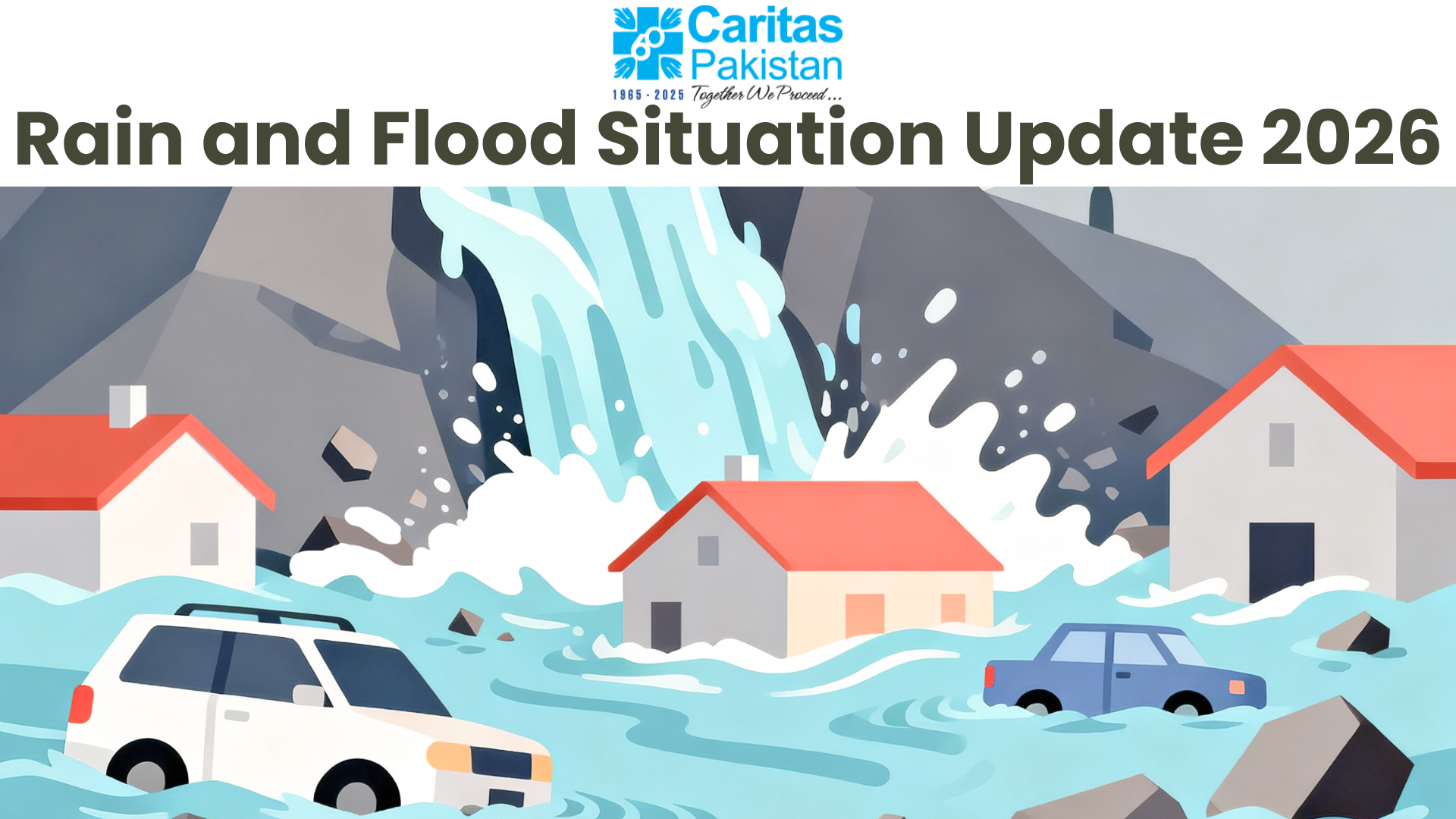
Pakistan is experiencing an active monsoon season in 2026, with heavy rainfall affecting several parts of the country. Intense monsoon spells have triggered flash floods, urban flooding, riverine flooding, landslides, and hill torrents in vulnerable areas. The National Disaster Management Authority (NDMA) has issued multiple weather and flood advisories.
Since the start of the monsoon season, rainfall-related incidents have caused significant humanitarian impacts, including deaths, injuries, damage to houses, displacement of families, and disruption of livelihoods. Nationwide monsoon death toll crossed 100 fatalities, with Punjab and Khyber Pakhtunkhwa among the most affected provinces.
Agriculture and livelihoods are under pressure as excessive rainfall and flooding can damage standing crops, livestock, irrigation systems, and the income sources of rural communities.
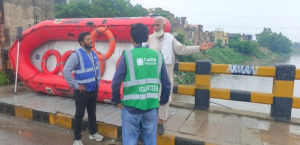
The major rivers of Pakistan, including the Indus, Chenab, Jhelum, Ravi, Sutlej, and Kabul, are under continuous monitoring. Increased water flows have created flood risks in riverine districts, particularly along the Chenab and Jhelum river systems. Flood surges have been highlighted around Marala on the Chenab River and Mangla on the Jhelum River, while several hill torrents and seasonal streams remain vulnerable to sudden flooding.
Precautionary Measures by Caritas Pakistan
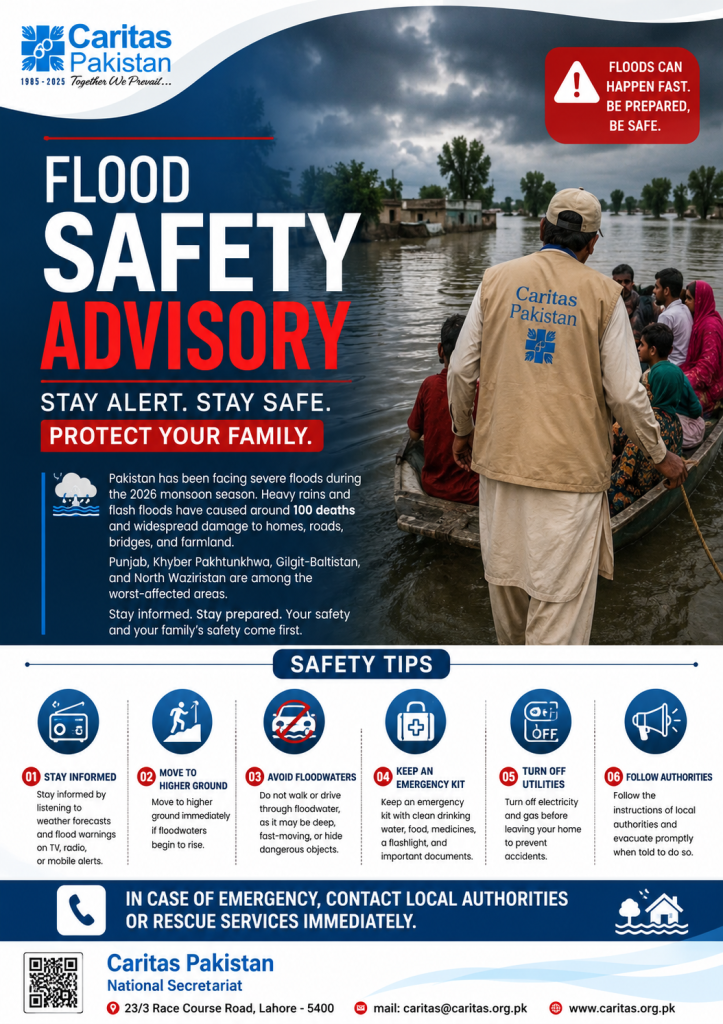
- Follow weather forecasts, flood alerts, and instructions issued by NDMA, PDMA, local authorities, and emergency services.
- Keep essential supplies ready, including drinking water, dry food, medicines, first-aid items, torch, batteries, mobile charger, and important documents in waterproof packaging.
- Know nearby safe shelters and higher ground areas. Leave immediately when evacuation orders are issued.
- Do not walk, swim, or drive through floodwater as it may contain hidden dangers, strong currents, contamination, or electrical hazards.
- Move valuable items, livestock, and important household materials to higher and safer places before flooding occurs, Move animals to safe locations.
- Store clean water and avoid using contaminated floodwater to prevent diseases.
- Turn off power supply and gas connections if water enters the house to prevent fire and electrocution risks.
- Give special attention to children, elderly people, persons with disabilities, and pregnant women during evacuation.