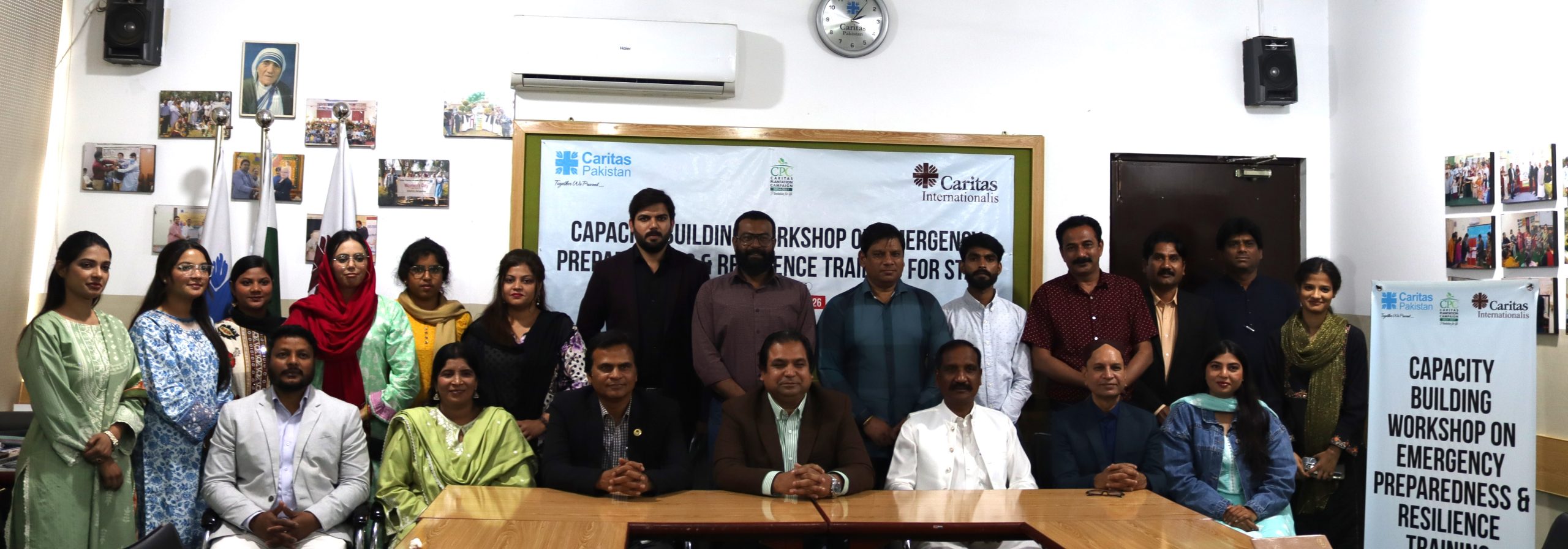
Capacity Building Workshop on Emergency Preparedness and Resilience Training for staff 2026
-
by
Faeq Rashid
 Faeq Rashid
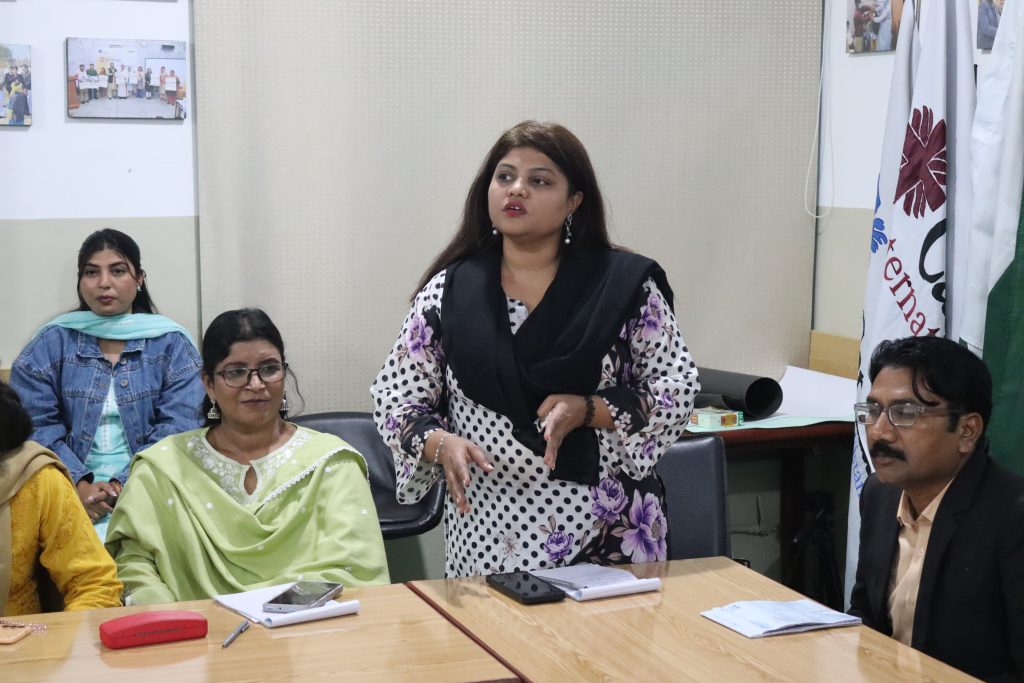
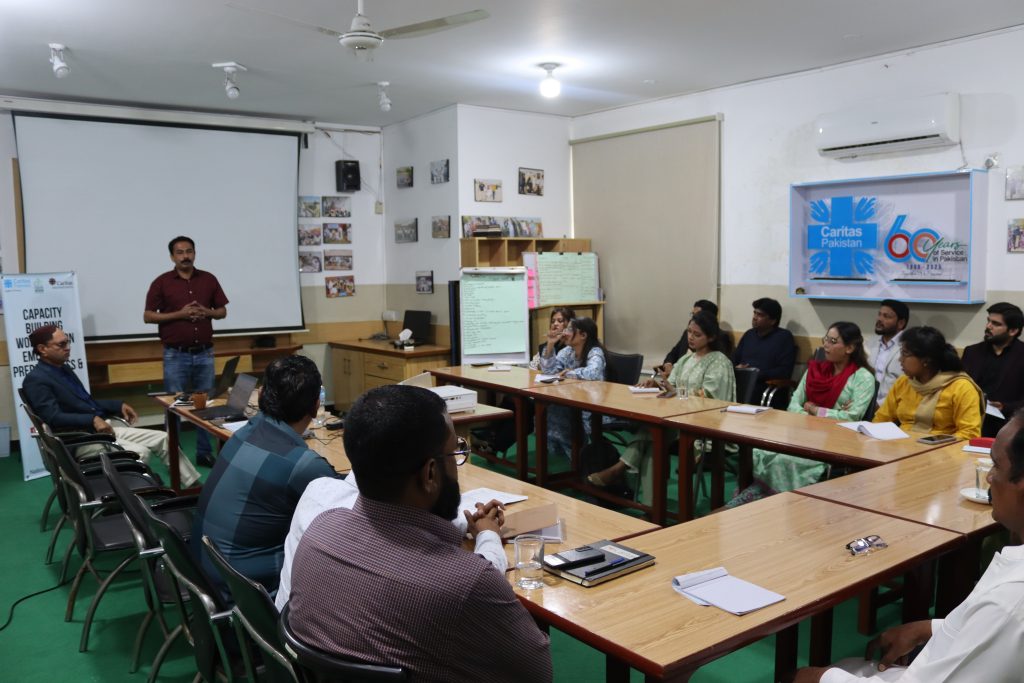
Caritas Pakistan National Secretariat (CPNS) organized a Capacity Building Workshop on Emergency Preparedness and Resilience Training for its staff on February 24–25, 2026, with the aim of strengthening institutional capacity to effectively respond to disasters and support vulnerable communities across Pakistan. In recent years, the country has experienced recurring natural disasters, particularly floods, which have intensified due to climate change, increasing rainfall variability, and environmental degradation. These challenges have heightened the vulnerability of communities and underscored the urgent need for stronger preparedness, improved coordination, and more resilient response systems within humanitarian organizations.
The workshop focused on enhancing staff knowledge of emergency preparedness, clarifying the roles and responsibilities of Emergency Response Teams (ERT), and improving communication and coordination mechanisms during disaster situations. Participants were provided with a comprehensive overview of the evolving flood situation in Pakistan, including key trends, high-risk regions, and the socioeconomic impacts on affected populations. This helped build a shared understanding of the scale and complexity of emergencies faced in the country.
‘Executive Director Mr. Amjad Gulzar highlighted the increasing frequency and severity of disasters. He stressed that preparedness involves strengthening systems, empowering staff, and building resilient communities before crises occur.’
A significant component of the training involved analyzing the 2025 flood response, where participants critically reviewed operational strategies, identified humanitarian needs, and examined the challenges encountered during implementation. Through interactive discussions and group work, participants reflected on coordination gaps, communication challenges, and community engagement approaches, while also highlighting successful practices. These reflections enabled participants to draw practical lessons and propose actionable recommendations to strengthen future emergency responses.
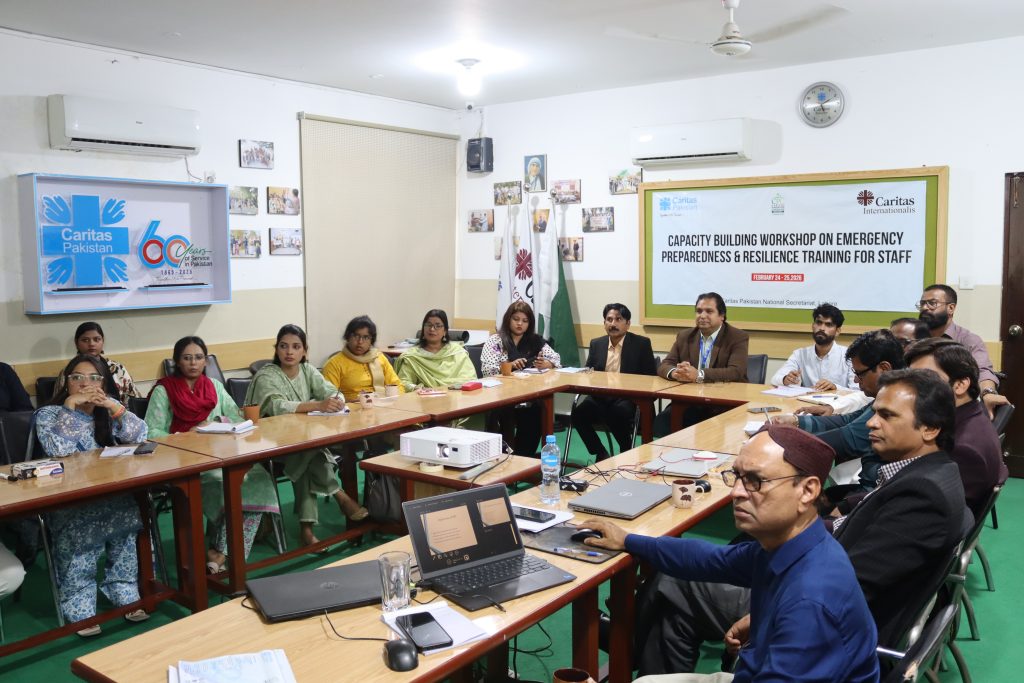
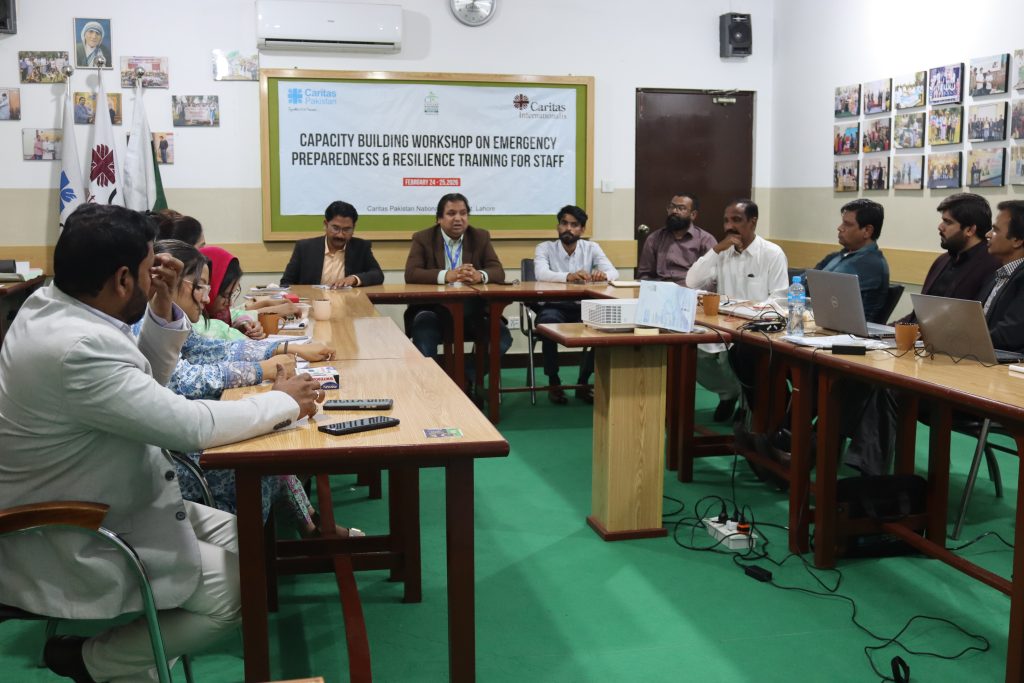
The workshop also emphasized the importance of effective communication systems, particularly in ensuring timely information flow between field teams, diocesan units, and national coordination structures. Participants discussed ways to improve collaboration with local authorities and humanitarian partners, as well as strategies to enhance accuracy and efficiency in information sharing during emergencies.
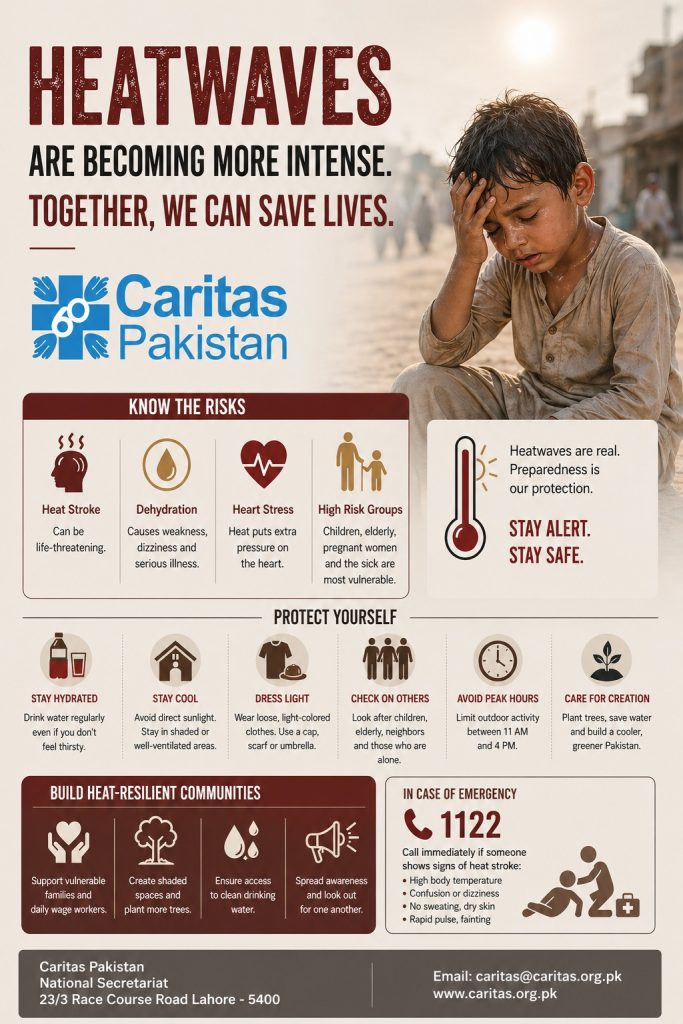
In addition, participants developed practical plans to strengthen preparedness and resilience at both institutional and community levels. These plans focused on improving emergency coordination, enhancing volunteer engagement, promoting community awareness, and ensuring quicker and more effective response mechanisms. The use of Information, Education, and Communication (IEC) materials was also explored as a key tool for raising awareness and promoting disaster risk reduction practices among vulnerable communities.
Overall, the workshop contributed to improved understanding of emergency preparedness among staff, strengthened clarity on Emergency Response Team roles, enhanced communication and coordination mechanisms, and identified key lessons from past responses.