Flood Situation of Southern Punjab 2025
 Faeq Rashid
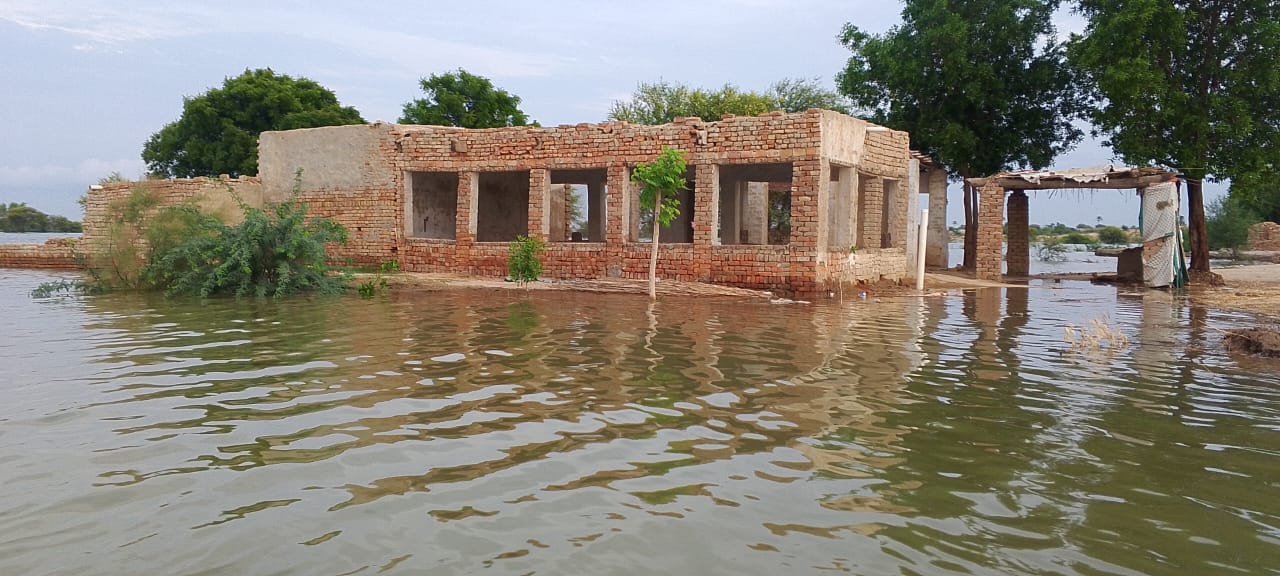
Thousands of families in South Punjab have been displaced as floods triggered by the overflowing Indus and Chenab rivers swept away homes, crops, and farmland. Among the worst-hit districts are Layyah, Taunsa Sharif, Kot Addu, Dera Ghazi Khan, Muzaffargarh, Rajanpur, and Multan.
In Multan, floodwaters entered several villages, devastating crops and mango orchards. In Kot Addu, residents of Ehsanpur and Hinjrai union councils were forced to flee with their livestock. In Layyah, the floods destroyed roads linking the Layyah-Taunsa bridge after breaching protective embankments. Thousands from multiple union councils in Layyah and Taunsa have abandoned their homes and are now living under the open sky. At Head Taunsa, water flow has surged to 500,000 cusecs, posing a grave threat to downstream areas in Dera Ghazi Khan and Rajanpur.
In Muzaffargarh, locally constructed bunds collapsed in Jatoi and Alipur tehsils, forcing large-scale evacuations. Entire villages near Khairpur, Basti Laskani, and Kehal now stand deserted.
In Sahiwal, a medium-level flood in the River Sutlej has forced the evacuation of more than 400 villagers, along with 200 livestock, from riverine settlements in the District of Pakpattan and adjoining areas near the Bahawalnagar boundary.
At Gandha Singh downstream, the Sutlej’s water level has risen sharply from 73,000 to 129,886 cusecs. Similar flooding has been reported in Nullah Dek and Basantar near Shakargarh. At the Sutlej’s Sulaimanki site, flows have reached 80,943 cusecs, while at Melsi Safain they stand at 37,859 cusecs. At Islam headworks, water levels remain normal at 39,601 cusecs.
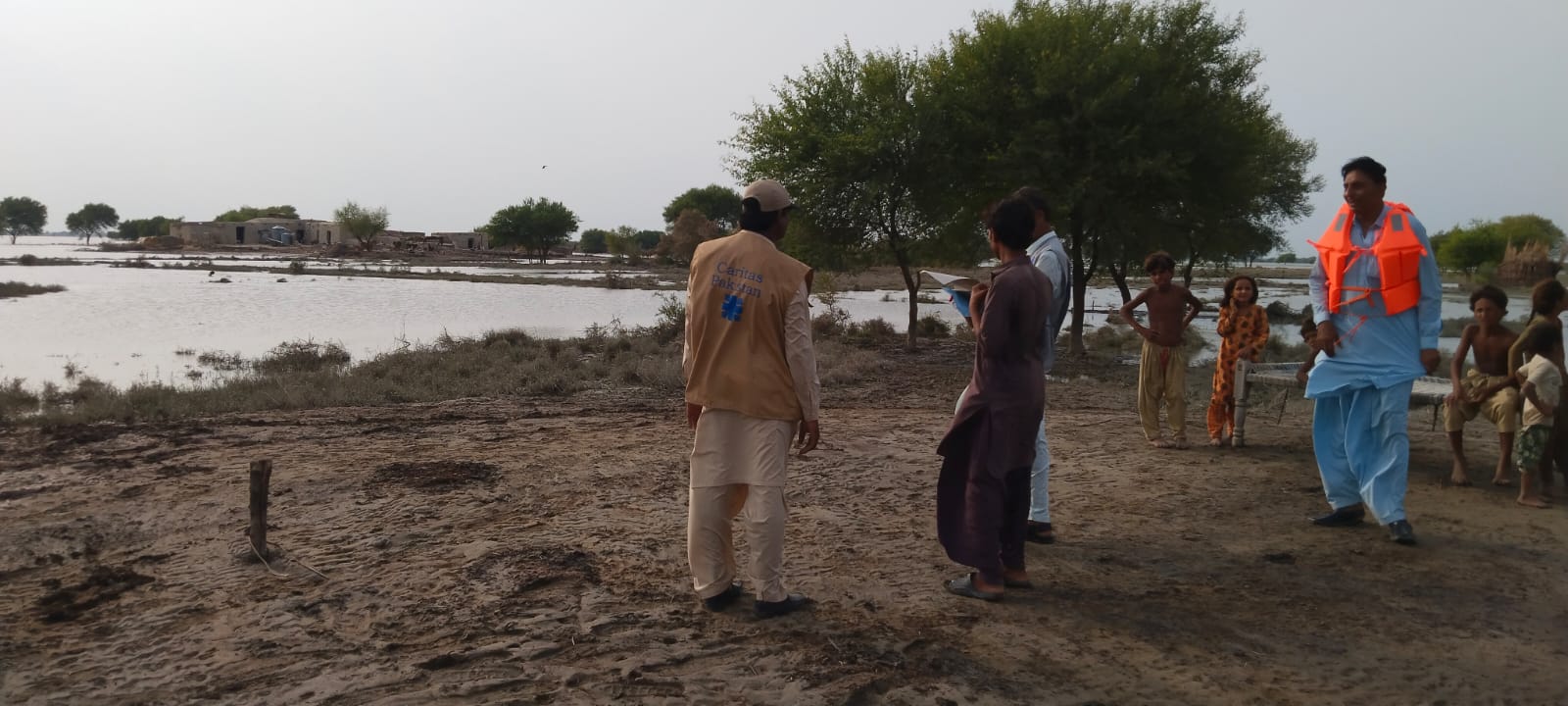
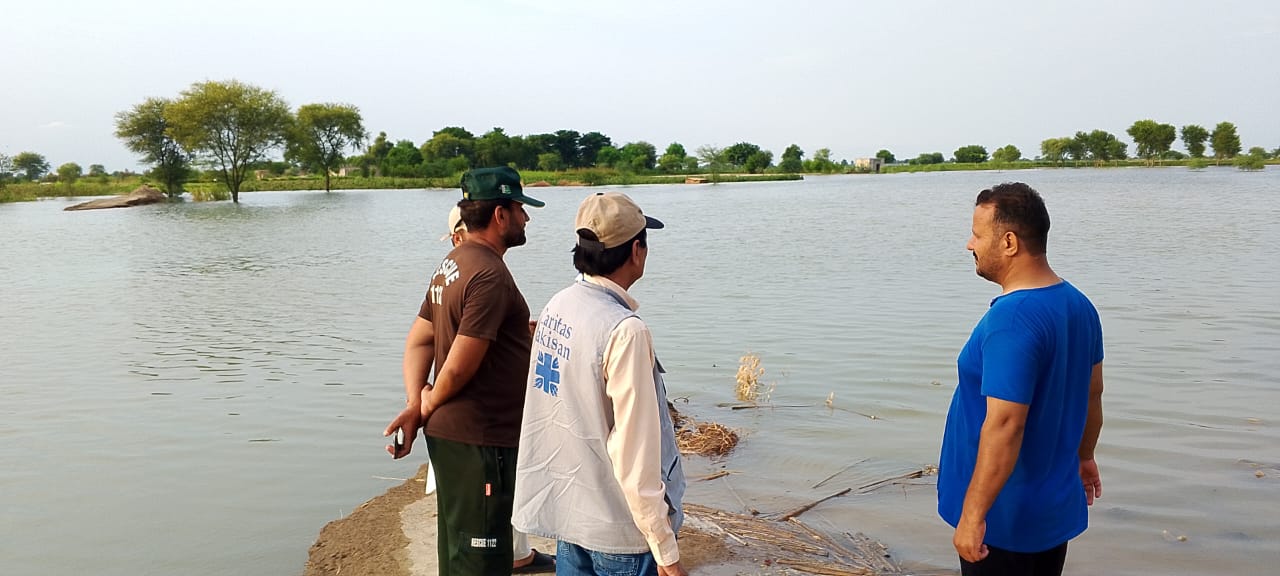
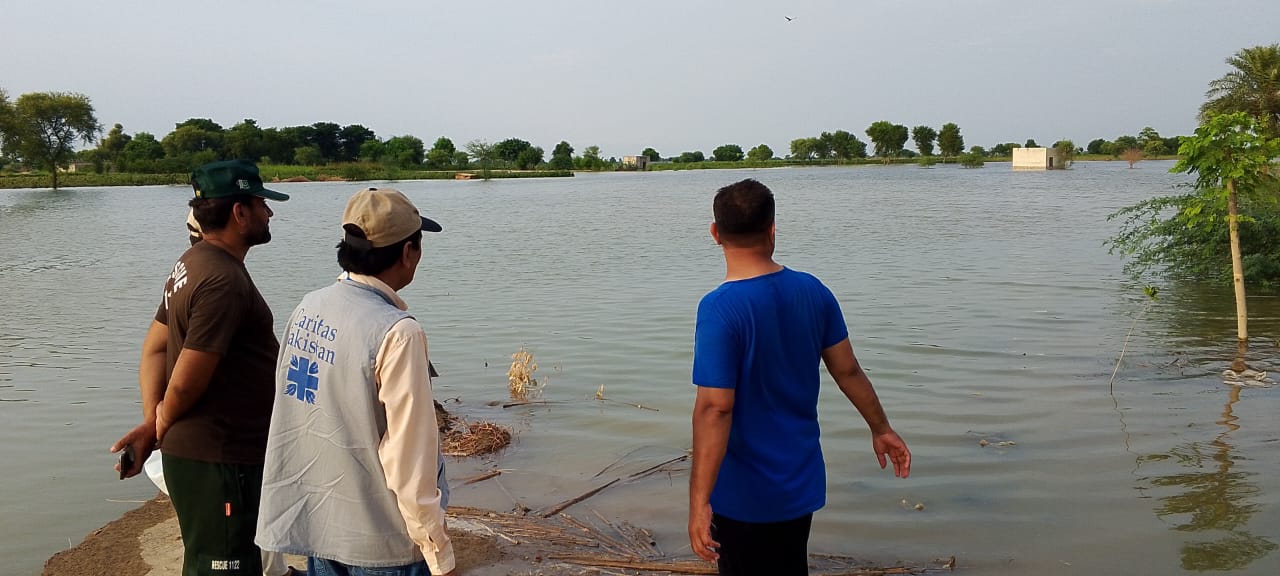
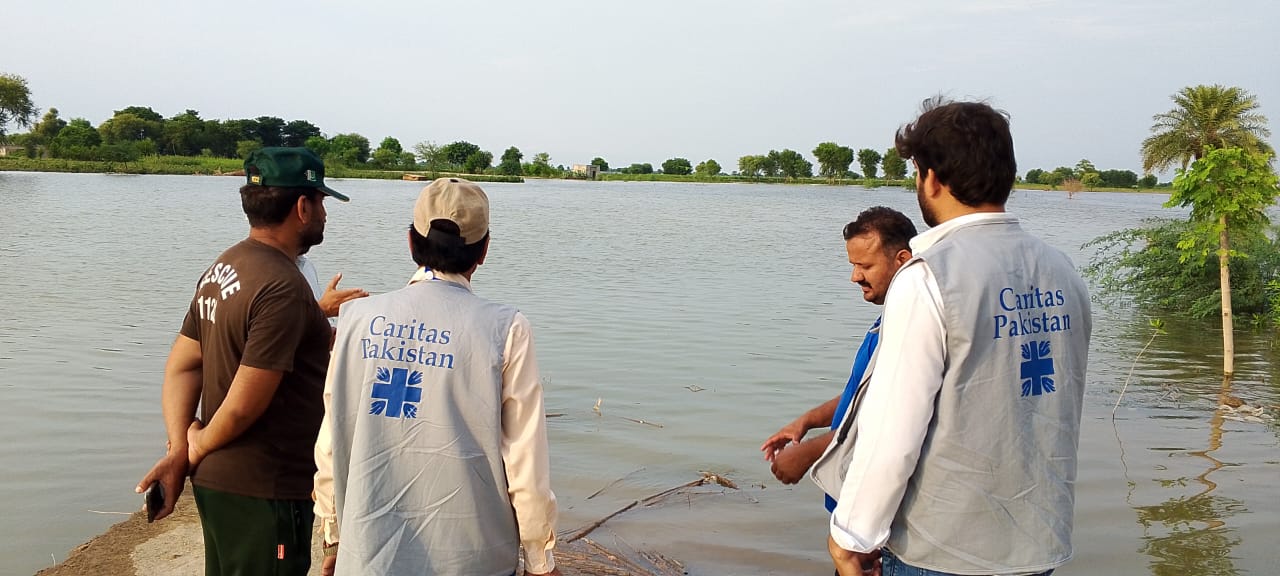
Caritas Pakistan Multan Emergency Response Team (ERT) is on the ground, conducting needs assessments to identify urgent humanitarian requirements.
Meanwhile, the Pakistan Meteorological Department (PMD) has issued a warning of another spell of heavy monsoon rains, effective from August 23. Torrential downpours, thunderstorms, and strong winds are expected in the upper and central regions until August 27, followed by intense rainfall in Sindh as well as eastern and southern Balochistan between August 27 and 29.